Individuals with valuable property and close loved ones often think carefully about the legacy they want to leave when they die. The desire to leave a meaningful legacy can be what drives an individual to establish an estate plan.
People can provide specific property for particular members of their family and can even arrange for assets to pass to charitable causes as a means of having a positive impact on the world. Before the personal representative of an estate can transfer their property to specific beneficiaries, they first have to fulfill certain probate requirements.
Financial obligations can consume some of the decedent’s property and reduce the impact of their legacy on their selected beneficiaries. Proper planning can diminish the negative impact of obligations on the value of an estate. For example, the following costs are likely to diminish estate resources and the legacy an individual leaves.
Estate taxes
For those with particularly sizable personal holdings, estate taxes are a significant concern. Those with multi-million dollar estates may have to plan for both state and federal estate taxes to optimize what their loved ones inherit. Without advanced planning, a significant portion of an individual’s property may end up filling government coffers instead of supporting their loved ones.
Personal debts
Generally speaking, any personal financial obligations unfulfilled at the time of an individual’s death become the responsibility of their estate after their passing. Credit card balances, student loans and medical debts are all examples of financial obligations that the personal representative of the estate must cover before distributing property to beneficiaries. Even probate costs typically require payment in full before beneficiaries receive anything from the estate.
Medicaid benefit repayment
Medicaid can help cover long-term care costs for those who need in-home support, extensive rehabilitation care or a room in a nursing home. Older adults may have to make certain financial adjustments to qualify for Medicaid. Property that may not prevent them from obtaining benefits when they are medically vulnerable can be at risk of claims brought by the Medicaid estate recovery program after their passing. The home where someone lives typically does not count against them for the purpose of obtaining Medicaid but can be vulnerable to repayment claims against their estate after their death.
Thorough estate planning is as important for those with millions of dollars in property as it is for those with middle-class income and substantial debt. People who understand how financial obligations can diminish what their loved ones inherit might have an easier time creating estate plans that protect their legacy after they pass.
When do New York estates have to pay estate taxes?
All of the property that belongs to someone who has recently died typically becomes part of their estate. However, not every asset in the estate passes to the heirs or chosen beneficiaries of that individual.
The personal representative of their estate has to make an effort to pay their debts and settle their tax obligations before distributing what remains among beneficiaries. In some cases, individuals with fewer resources in their estates may not have enough to leave a meaningful legacy after fulfilling their financial obligations.
Others have the exact opposite problem. Their estates are valuable enough to lead to estate taxes. Estate taxes can consume a significant portion of the property the testator wants to leave for their loved ones or charitable causes. People can potentially plan ahead of time to avoid estate taxes when they die.
Only multi-million dollar estates have to pay estate taxes
Most states do not impose an estate tax, but New York unfortunately does. When people die in New York, the personal representative of their estate has to review their resources and financial obligations. They may need to retain assets to cover estate taxes if the estate contains too much valuable property.
Estates in New York might be responsible for both state and federal estate taxes. In 2024, the threshold for New York state estate taxes is $6.94 million. The maximum state-level estate tax rate could be as high as 16%.
The estate has to be worth almost twice that much to be at risk of federal estate taxes. In 2024, the federal threshold for estate taxes is $13.61 million. The tax rate ranges between 18 and 40%. Those who have to cover the maximum federal and state estate tax rates may have to dedicate more than half of the resources in an estate toward tax obligations.
Prior planning limits tax liability
Those who plan carefully may be able to avoid or at least reduce estate tax obligations. Gifts made before someone died, assets transferred into a trust and ownership shared with other people can help limit the overall value event state and therefore what taxes the estate may have to pay.
Those with multiple real estate holdings and/or a privately held company may need to approach estate planning particularly carefully to preserve those resources and avoid estate taxes. Integrating tax concerns into a New York estate plan can help people maximize how much their loved ones inherit after they die.
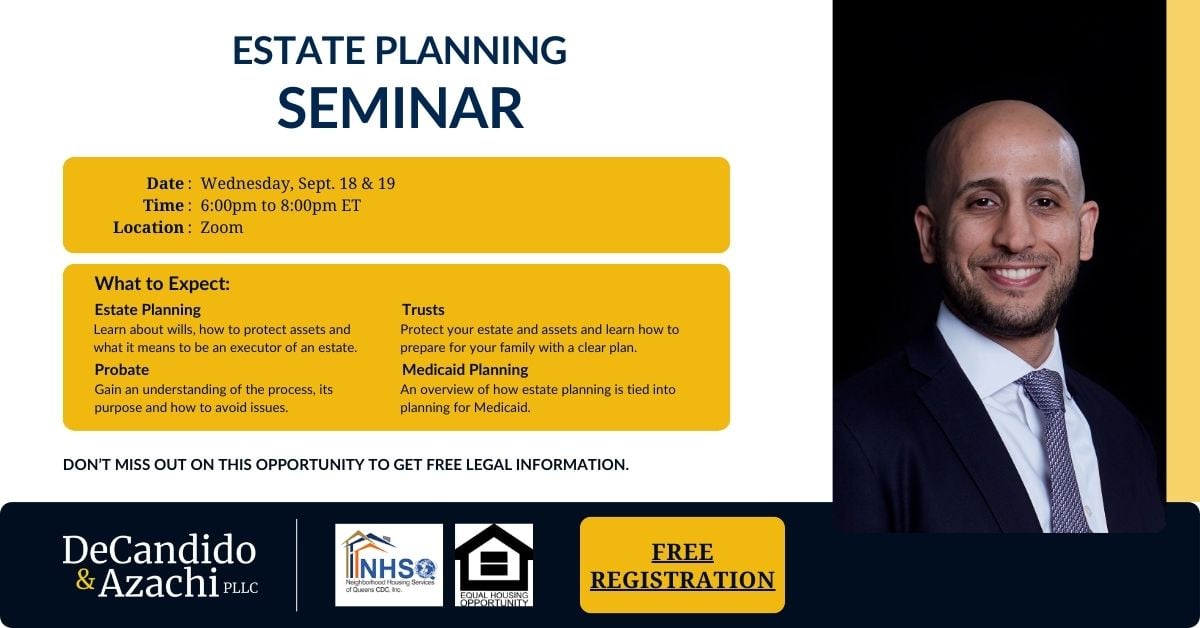
Homeowner Services Seminar: Estate Planning

Register for a free Zoom seminar about estate planning and considerations for home owners, those looking to protect assets from tax and Medicaid, and anyone who wants more information on how estate planning can support their long-term financial goals. Attorney Phil Azachi will also discuss common concerns about probate and estate administration as well as the tools available to minimize ongoing estate issues.
September 18 & 19, 2024 – 6:00-8:00PM EST
Free Registration


Avoiding Probate Fails – CLE Seminar

Join the upcoming seminar for continuing legal education to understand the missteps and pitfalls that can complicate the handling of a decedent’s estate. Attorney Phil Azachi will share his extensive experience navigating litigation matters related to intestate administration, offering attendees guidance on best practices to avoid potential challenges and disputes.
September 19, 2024 – 1:50-5:10PM EST

When planning your estate, it’s crucial to remember that not all beneficiaries are created the same. Some may struggle to manage their financial affairs or make sound decisions independently.
They might also be susceptible to exploitation or mismanagement of their inheritance. Recognizing these individuals and taking proactive steps to protect their interests is essential.
Minor children
Suppose you have children that you’re including in your estate plan; it’s important to acknowledge that they are perhaps the most vulnerable beneficiaries. Aside from being impressionable and easy to mislead, they’re also legally unable to manage their finances. Therefore, you should include special provisions to protect their interests.
Suppose you’re leaving a lump sum of money or significant assets to a minor; you might want to appoint a guardian to help them manage their financial affairs. Otherwise, the beneficiary may mismanage their inheritance because they don’t know any better. You can also consider establishing a trust that will hold the minor’s assets until they are more mature enough to manage their own financial affairs.
Individuals with disabilities
Beneficiaries with disabilities may need ongoing care or specialized services, making it essential to plan accordingly. If you leave assets directly to an individual with disabilities, they may become ineligible for government benefits. This is because government programs often require the recipient to have limited resources.
Instead, you can establish a special needs trust (SNT) to help ensure the beneficiary with disabilities receives an inheritance without jeopardizing their eligibility for essential benefits. The funds in the trust can go towards supplemental needs, such as medical care, therapies or home modifications.
Individuals with addiction or behavioral issues
A beneficiary struggling with addiction or behavioral issues is particularly vulnerable to misusing their inheritance. Providing direct access to a large sum of money could exacerbate their problems or place them in harmful situations. For such beneficiaries, a discretionary trust can help ensure there’s a trustee who retains control over the disbursement of funds. You can also add specific provisions that tie distributions to the beneficiary’s participation in recovery programs or treatment.
Estate planning is not just about dividing assets; it’s about making thoughtful decisions to protect your beneficiaries’ future. With appropriate legal guidance, you can tailor your estate plan to account for vulnerable beneficiaries. This way, you can set up a lasting legacy that more effectively protects your loved ones and secures their financial well-being.
When is the ideal time to create an estate plan?
Estate planning is one of those responsibilities that people generally don’t enjoy addressing. Most people have an endless array of excuses for why they continue to procrastinate about estate planning. They have big financial moves in the works or intend to expand their families soon. They may feel like they are still too young and healthy to need to think about incapacity and death.
The unfortunate reality is that quite a few people end up procrastinating for so long that they die without an estate plan. Their loved ones are then vulnerable because no prior arrangements have been made, and no notice as to what should happen with their property has been detailed.
When is the best time for someone to start the estate planning process?
As soon as an individual becomes an adult
Many people think of estate planning as a way to distribute property or protect dependents. Someone who hasn’t yet accumulated much property and who doesn’t have a spouse or children may dismiss the idea that they need an estate plan.
However, they have not considered their own vulnerability adequately. Medical privacy laws leave new adults in a particularly precarious position. Their parents no longer have any authority to make choices about their care or to access private information about their condition. That remains true even in an emergency that leaves someone unconscious or dependent on life support.
New adults may benefit from drafting advance medical directives explaining their medical preferences and powers of attorney that grant trusted individuals the necessary authority to manage their finances and make medical decisions. They can then update those documents as their lives progress.
After becoming a spouse or parent
People who don’t choose to take action for their own protection may instead find motivation due to concern about their loved ones. Parents and spouses often want to provide for their loved ones should an emergency occur. Creating an estate plan after getting married or becoming a parent allows someone to provide financial support for their dependents and to take the pressure off of their closest family members in the event of a medical emergency.
After achieving personal success
Even those who have not yet developed their families may have valuable assets in their names. Those who own real property, businesses or investment accounts might want to create estate planning documents to address their resources. Otherwise, intestate succession laws that prioritize close family relationships dictate what happens with their assets when they die.
People often need to continually revisit and update their estate plans as their circumstances change. Yet, getting started with initial documents is the first crucial step for the protection of a testator and the people they love in this regard.
Trusts can play an important role in estate planning
Estate planning is rarely a straightforward process. And for those who have considerable assets, planning for long-term care needs and eventually distribution to beneficiaries can be particularly challenging.
One option that can help individuals to achieve their estate planning goals is to set up trusts, although not all trusts are the same. Understanding the basics of how trusts function can help those with considerable assets to make more informed choices about their estate planning options.
Revocable versus irrevocable trusts
One of the primary differences between certain trusts is that they’re either revocable or irrevocable. A revocable trust is one that you maintain control over, so you can change the terms or dissolve it as desired. An irrevocable trust is one that a trustee controls, so you can’t change or cancel it once it’s set up and funded. Both types of trusts can get assets to your beneficiaries privately since they bypass the probate process.
Irrevocable trusts have some benefits that revocable trusts don’t. Because you don’t control those assets, they aren’t counted as part of your estate. This can reduce estate taxes. Additionally, the assets are protected from creditor claims against you.
Medicaid planning
Many Americans who are over 65 years old receive Medicare, which isn’t a needs-based program. Medicare doesn’t provide coverage for long-term care, so some of these individuals will need additional assistance.
Medicaid is a government-administered medical coverage program. It’s needs-based, so only people who meet specific requirements are eligible. Part of creating an estate plan can be using specific trusts, such as a Medicaid Asset Protection Trust, to house assets in a way that won’t impact eligibility.
Because the Medicaid program is needs-based, it uses a five-year lookback period to determine eligibility. Certain transactions, such as selling assets or giving them away during that time can result in a penalty that’s handled via a specific period of ineligibility.
Estate planning can be a complex undertaking, especially for those with considerable assets. Working with a legal representative who can assist with finding ways to facilitate an individual’s unique needs and goals can help to reduce the stress for anyone who’s creating an estate plan.
One of the more common reasons that people delay formal estate planning is concern about the expense involved. Many people worry that they may have to spend thousands of dollars putting together documents and reviewing their financial records with an attorney.
Some lawyers capitalize on that economic concern by engaging in deceptive marketing practices. They may claim to offer robust estate planning services at a flat rate. Flat-fee attorney services may seem like a cost-effective solution, but many clients end up surprised by how much they actually have to pay for the legal services that they secure.
Others may end up disappointed with the quality of the advice and documents they receive. What are some issues prospective clients need to know about before hiring a lawyer on a flat fee basis?
Flat-rate representation isn’t necessarily the best
A layer advertising their services for a flat rate hopes to bring in as many clients as possible and do as little work as possible for each client. They depend on volume, and the quality of representation isn’t necessarily the same as it might be with an attorney charging by the hour. Attorneys cost, on average, more than $300 per hour for legal advice and representation. Someone who needs help creating or updating an estate plan may be better served by paying an attorney hourly and getting the best support possible rather than looking for discount options of questionable quality.
Flat-rate pricing isn’t transparent
Attorneys often have much fine print involved in their contracts for flat fee services. That flat fee may only cover a certain amount of time or specific types of documents. Anyone requiring additional review or facing unusual circumstances may not be eligible for flat-rate services. Additionally, lawyers may charge them a la carte or hourly for any extra work required. What seemed like a competitive flat rate may end up turning into thousands of dollars in additional costs when someone needs a trust or powers of attorney.
Particularly when the flat rate is for estate administration or probate services, a lawyer could take unethical steps to justify billing a client for more than the agreed-upon fee. Some lawyers even intentionally contribute to disputes as a way to increase what they can charge their clients because a dispute arises. Overall, it is often a much better option to hire a lawyer based on their experience and how well what they offer aligns with an individual’s needs. Those who sit down to talk about their needs with a lawyer they can trust may feel more comfortable about their final decision regarding who they hire.
Prioritizing thoroughness and experience is often better than focusing solely on advertised prices when hiring a lawyer for estate planning purposes. Those who understand the shortcomings of flat fee illegal representation can more effectively avoid scenarios in which they end up paying far more than they budgeted for while estate planning.
What should you know about challenging a will?
Estate planning gives adults the chance to lay out a plan for what will happen to their assets after they pass away. Some people opt to accomplish this goal through trusts, but others count on their will alone.
The problem with using a will to pass down assets is that it leaves the chance for someone to challenge one’s wishes. While this isn’t common, it’s something to think about when you’re creating an estate plan.
Who can challenge a will is limited
There are only very specific people who can challenge a will. These include:
- Beneficiaries of the current or former will
- Heirs who would inherit assets if you didn’t have an estate plan
- Creditors who can file a claim against the estate
By limiting who can file a will contest, it takes away the possibility of people who have no legal interest in the will delaying the actual beneficiaries from being able to get their portion of the estate.
Circumstances for challenges are limited
In order to contest a will, there must be something specific that points to a legal need to alter or cancel the will. One of the more common reasons to contest a will is because of undue influence. This occurs when a person convinces you to change something in your will for their own benefit.
Another reason is if you were unable to legally create a will when you signed it. This is typically because of an altered mental state, such as intoxication or insanity. In order to be considered “of sound mind” for estate planning, you have to:
- Understand the value of the assets in your estate
- Know who the beneficiaries are
- Recognize who you’re legally responsible to provide for
- Realize what you’re passing down through your estate plan
If all of those are present, you can’t be presumed to have lacked the testamentary capacity to create the will.
Forgery, fraud and failure to meet the legal requirements for the will are also possible causes for someone to contest your will. These all have to do with how the will was created and signed. All wills must be created based on the terms you decide, including your signature unless there’s a valid reason for you not to sign and have suitable witnesses.
Creating a solid estate plan is critical undertaking for all adults. Making sure that it’s legally enforceable and not likely to be contested may give you peace of mind and help your loved ones to follow your wishes when you’re gone.
Estate planning for end-of-life and incapacity care
Many people focus on passing down assets in their estate plan, but that’s not the only thing a comprehensive estate plan does. It should also outline your preferences for your end-of-life care and care in the event that you’re incapacitated due to illness or injury more broadly.
When you’re getting the plans sorted out, you should focus on two specific concerns— medical care and financial matters. Setting everything up for these two areas of life can give you peace of mind because you’ll know you’re taken care of, and your family won’t have the burden of making every decision for you.
Planning for medical care
A healthcare proxy, also known as a medical power of attorney, allows you to appoint someone you trust to make healthcare decisions on your behalf if you are incapacitated. This document ensures that the person making decisions about your medical care understands your wishes. It’s important to have candid discussions with your chosen proxy about your values and the extent of medical interventions you desire.
A living will is a type of advance directive that specifies your preferences regarding medical treatments and life-sustaining measures, such as artificial hydration and nutrition, if you are terminally ill or in a persistent vegetative state. While New York State doesn’t have a statute specifically for living wills, courts have upheld them as evidence of a person’s wishes regarding end-of-life care.
DNR orders are specific instructions not to use cardiopulmonary resuscitation if your heart stops or if you stop breathing. This directive is crucial for individuals who wish to avoid aggressive measures that might prolong life in situations of terminal illness or severe quality of life impairment.
Planning for financial matters
A power of attorney for finances allows you to designate an agent to manage your financial affairs. This can include paying bills, managing investments and making financial decisions. A durable POA means it remains in effect if you become incapacitated, ensuring continuity in managing your financial matters without court intervention.
These end-of-life and incapacity components of an estate plan are terminated when you pass away. The financial decisions will then fall on the person who has been granted authority over your estate. These are only parts of a comprehensive estate plan, so it’s critical to work with a legal representative to ensure your wishes are sufficiently relayed overall.
Connect with us


- June 2026
- May 2026
- April 2026
- March 2026
- February 2026
- January 2026
- December 2025
- November 2025
- October 2025
- September 2025
- August 2025
- July 2025
- June 2025
- May 2025
- April 2025
- March 2025
- November 2024
- October 2024
- September 2024
- August 2024
- July 2024
- June 2024
- May 2024
- April 2024
- March 2024
- February 2024
Archives

-
Follow Us On Social Media!