
If a business owner in Texas dies without a will or other estate planning tool, like a trust, a buy-sell agreement, or updated governing documents for the business, Texas law will decide how the estate is handled. The decisions made might not be what the business owner wants, what’s best for his or her beneficiaries, or even what’s best for the business. Talk to a Plano, TX business attorney right away to get your succession plan in place and be confident in the future of your business.
Read the rest of this entry »ATTORNEY ADVERTISING: This blog post constitutes attorney advertising under New York Rules of Professional Conduct.
By DeCandido & Azachi, PLLC — New York Estate Planning Attorneys

Estate planning. Most people hear the term and instantly picture complicated legal documents or billion‑dollar families battling over inheritances. But the truth is simple: estate planning is about clarity and protecting the people who matter most. Whether you’re in a Manhattan loft, a Queens co‑op, or a Brooklyn brownstone, estate planning gives your family peace of mind.
Read the rest of this entry »DISCLAIMER: This article is provided for informational purposes only and does not constitute legal advice. The information contained herein should not be relied upon as a substitute for consultation with a qualified attorney. No attorney-client relationship is created by reading this article.
NOTE: This article discusses general principles of New York estate planning law as of January 2026. Laws and regulations are subject to change, and the application of these principles depends on the specific facts of each case.

Planning for your future is essential, and working with an estate planning attorney in Queens, NY can help you navigate the process of protecting your assets. Both a will and a trust may be important components of a comprehensive estate plan, and a trust may offer certain practical advantages for managing your estate after death. However, the appropriateness of either instrument depends on your individual circumstances, and you should consult with a qualified attorney to determine the best approach for your specific situation.
Read the rest of this entry »Can a Will Be Contested in Probate Court?

Once a will has been filed with the probate court, it can be contested by any interested party. Whether you are trying to move an estate smoothly through probate, need to contest a will, or are trying to plan your estate to avoid this issue, speaking with a Forest Hills, NY probate attorney will give you peace of mind and the answers you need.
Read the rest of this entry »
Selling a business is as big a milestone as buying or opening it in the first place. If it’s time to sell, it’s important to do it right and with the help of a Plano, TX business lawyer. There are a number of key steps, and a successful sale will require some strategic planning.
What Are the Legal Steps to Selling a Plano, TX Business?
Get Your Finances In Order
You want your financial records to be very organized, and you should include in this organized layout all your tax returns, balance sheets, cash flow statements, and profit and loss statements since the business began or since you took it over. You also need to do a full review of your assets and liabilities. If you’re able to resolve any liabilities, you’ll want to do so, so that your balance sheet looks as good as possible.
Get Your Operations in Order
If you’re looking to sell, you want to present a well-organized machine that doesn’t need a ton of work for the new owner to make it profitable. Start documenting your standard operating procedures, if you’ve not already done so, so it’s easy for someone to step in. Make sure that all your contracts and licenses can be transferred to a new owner, and if you’re able to diversify your customer base and your suppliers, do so. Buyers tend to get nervous when they see that a business relies primarily on just one customer or one supplier.
You’ll also have an easier time finding a buyer if you’ve already evaluated your people and can tell a buyer immediately which employees are vital to the success of your business. Make sure that all the contracts and policies you have with your employees are up-to-date and legal.
Talk to a Business Lawyer
You’ll want to talk to an experienced business lawyer who can help you understand all the legal concerns that come with a business sale. A good lawyer will also be able to help you understand the tax implications and figure out the best structure for your sale to maximize your profit and minimize liability.
Get All Legal Agreements Dealt With Properly
As you reach the finish line, it’s very important to do the last steps in particularly very carefully. Make sure you have a lawyer working on your transfer of ownership and all the terms and conditions of sale. Your lawyer will also be able to make sure that all the payment and closing fund costs are transferred legally and securely.
Keep Very Careful Records
All along the way, keep comprehensive, careful records. Make a note of every step you take, make copies of every important document, and save all communication that you have with potential sellers, business or asset valuators, lawyers, tax professionals, and anyone else involved.
For the kind of individualized representation that can make all the difference to your business needs, schedule a consult with us at DeCandido & Azachi in Plano, TX today online or by phone at 972-882-6600.

When you pass away, you want your estate to move smoothly into the hands of your family and for everything to be divided up precisely according to your wishes. Unfortunately, family disputes are not uncommon here in Forest Hills, NY. An estate planning lawyer who knows state and federal law well can help you protect your estate and your family with a strong plan that minimizes the possibility of disputes.
How Can You Avoid Family Disputes Over an Estate?
Work With an Estate Planning Lawyer in Forest Hills, NY
The first tip is the simplest: always work with a lawyer. An estate planning attorney has seen it all before and worked with many families. They will be able to give you the personalized direction and advice you need to protect your estate. They also understand New York law and the New York probate courts and can protect you and your family while working with both. A good lawyer knows what questions to ask to dig out potential dispute areas and then formulate a plan to prevent them.
Keep Communication Lines Open
Some people think that it’s best to keep their estate plans quiet until they die, often because they don’t want to deal with angry, confused, or disappointed relatives in the moment. While this is understandable, open communication is the best way to prevent disputes later.
As hard as these conversations may be to have now, things will be much worse when you’re not there to explain directly what you’re thinking or to show everyone through open discussion what it is you want and that you are of sound mind. Explain the reasons behind your decisions now and be as transparent as you can about the assets and debts of your estate.
Make Your Documents Clear
Ambiguity is a common reason for disputes among heirs. When a will isn’t crystal clear, heirs can interpret it in different ways. This is most often an issue when people make a will on their own or using online forms. When you work with a qualified lawyer, your lawyer will make sure that everything in your will is very clear and point out where things could be misunderstood and give you advice on how to correct them.
Be Careful Choosing an Exectutor
The executor you name in your estate will be responsible for managing it after your death. It’s crucial that you choose the right person. They must be trustworthy, and they must be willing to give whatever time and effort is necessary to administer your estate correctly. They must be able to stay impartial, and they must have good financial and organizational skills. Never choose an executor who has been in conflict with anyone in the family or whom your family could see as biased. Often, it’s best to ask a law firm to act as your executor.
These are just a few ways to protect your estate and your family. For personalized advice and help in developing the right estate plan for you, contact DeCandido & Azachi in Forest Hills, NY or call us at 347-808-5746. We also have an office in Plano, TX.

There are many things to think about when you’re starting a business, and getting certain things wrong can cause you serious issues down the line. Talking with a Plano, TX business attorney can help you avoid these problems and ensure that your business gets the right start for a bright future.
How Can a Plano, TX Business Attorney Help With Business Formation?
1. Helping You Decide on Business Type
Deciding what type of business you want is one of your biggest decisions and will affect everything from taxes to your liability. The simplest type of business is the sole proprietorship, where you are the only owner and all profits pass to you. All company debts are also your responsibility. This is simple, but it also comes with some tax concerns and can leave your private estate open to liability. There are more complex structures available, such as limited liability corporations (LLC), partnerships, and more. A lawyer can help you decide which one is actually best for your future.
2. Keeping You Legal From the Start
There are plenty of Texas and federal laws that you have to be wary of when you start a business, as well as other issues you might not even have thought about. For example, once you pick your name, you have to make sure that no other company is already using it or anything that is so close to it that there could be confusion. This requires a careful search, which an experienced business lawyer can help you with. Your lawyer will also keep you on the right side of all state and federal laws and will help you with county and city permits, zoning ordinances, and license requirements.
3. Setting You Up for Tax Success
The IRS is never easy to work with, so bringing in a lawyer at the beginning helps you get set up for success when it comes to taxes. If you’re going to pay any wages, you’ll need to get an Employer Identification Number (EIN) from the IRS, and this can be a time-consuming process. There are plenty of hoops to jump through, and a lawyer can get you through them while you concentrate on dealing with your business itself. The type of corporation or partnership that you have started will have a big influence on how your taxes are calculated, so it’ll be a good idea to have a lawyer not only help you form your business but also deal with at least your first tax filing to make sure everything is done correctly and you don’t have any unpleasant surprises.
Talk With An Attorney Today
Even if you’re not sure what you want to do yet, talking with an attorney can help you solidify your plans and take the right steps for the future of your business. Call or visit us today at DeCandido & Azachi in Plano, TX to set up a consultation, and let’s get you set up for success. We also serve clients in Forest Hills, NY.
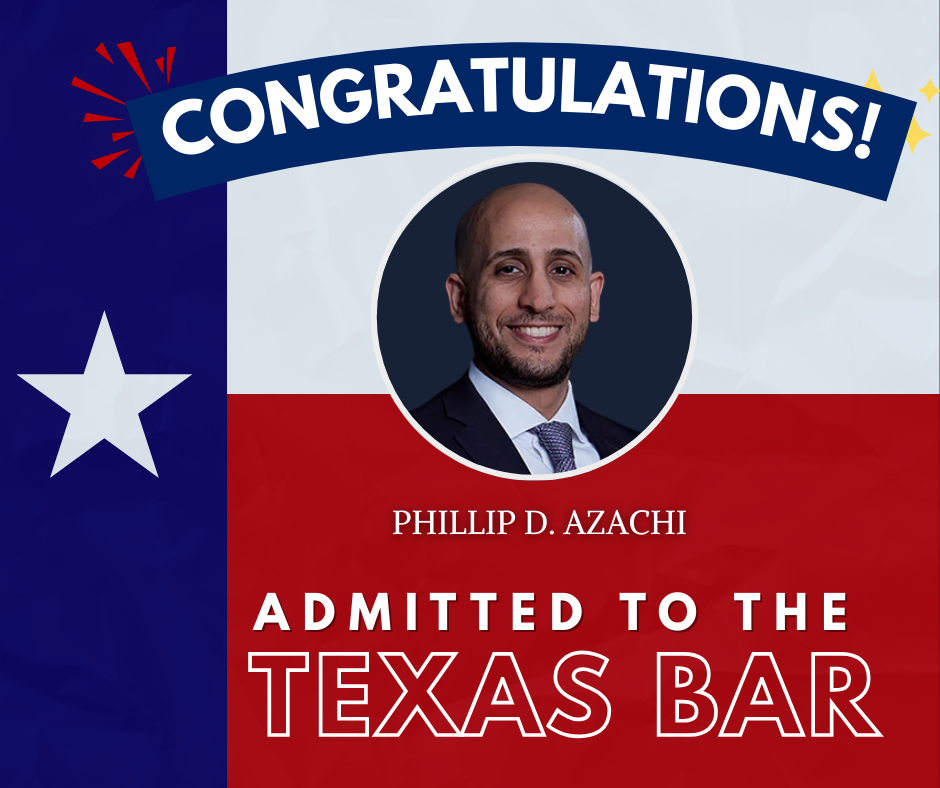
Plano, TX business owners and individuals can now benefit from local counsel with legal experience rooted in multiple jurisdictions. Phillip D. Azachi, partner at DeCandido & Azachi, PLLC, has recently been formally admitted to the Texas Bar, expanding the firm’s ability to serve clients in Collin County, Dallas‑Fort Worth, and beyond.
What Does Admission to the Texas Bar Mean?
- Legal authority in Texas: Only licensed Texas attorneys can represent clients in state courts, advocate in front of state agencies, or draft binding legal documents while practicing law in Texas.
- Ethical accountability & professionalism: State bar admission reflects a lawyer’s dedication to upholding Texas Rules of Professional Conduct.
- Local insight & credibility: An admitted Texas attorney understands state- and county-level statutes, regulations, and best practices.
As of his admission, Phillip D. Azachi can now provide direct representation in Dallas County, Collin County, and Plano, TX.
Read more about Phillip D. Azachi
Phillip D. Azachi: A Multistate Advocate Now Admitted in Texas
Phillip Azachi, previously licensed in New York, has long coordinated legal matters involving business law and commercial litigation. Now, with official Texas Bar admission, he serves local Plano clients directly in:
- Contract drafting & review for Plano businesses
- Business financing strategy, mergers, acquisitions, and succession planning in Collin County and Dallas‑Fort Worth
Learn more about business financing strategies - Estate planning, trusts, and probate tailored for Texas families and business owners
Explore our estate and trust services
Why Bar Admission Is Critical for Plano Clients
Valid Legal Representation in Plano, TX
Bar admission ensures clients receive legally valid and enforceable advice backed by state mandates and court authority.
Familiarity with Texas Law and Local Courts
From the Plano municipal courts to Collin County district courts, only attorneys admitted in Texas can properly represent clients.
Security & Trust
Bar admission includes background checks, continuing legal education, and adherence to ethical standards protecting clients in case handling.
How DeCandido & Azachi Serves Plano Clients Post‑Admission
Business Law & Contract Services in Plano, TX
Phillip and the team now deliver legal guidance on corporate formation, contract drafting, and asset protection directly in Plano and surrounding areas.
Explore our Texas business law services
Business Financing & Succession Planning
Local startups and legacy businesses can lean on Texas-bar admitted counsel for financing strategies, investment structuring, and exit planning.
Learn more about business financing
Estate Planning & Trusts
With Texas admission, the firm now offers wills, trusts, and probate services tailored under Texas law.
View estate planning options
Work with a Texas‑Bar Admitted Attorney in Plano
For business owners, families, and individuals in Plano and Collin County seeking legal representation from a fully licensed Texas attorney:
Contact DeCandido & Azachi in Plano, TX at 972‑882‑6600 or visit the Texas Office page to schedule your free consultation.
Conclusion
Phillip D. Azachi’s recent admission to the Texas Bar marks a key milestone in expanding DeCandido & Azachi’s capacity to serve clients in Plano, TX with authoritative, local legal services. His multi‑state licensure and ethical standards mean greater confidence for those needing business, estate planning, or dispute representation in Texas.
Choose trusted legal counsel fully admitted in Texas to represent you. Choose DeCandido & Azachi in Plano.

From a Probate Lawyer in Forest Hill, NY: Determining Whether Your Estate Needs to Go Through Probate
Asset Ownership
You do not have to probate assets that pass automatically to a beneficiary or joint owner. Property titled as joint tenancy with rights of survivorship, or as tenants by the entirety (used for married couples), transfers directly to the surviving co-owner.
Similarly, accounts that have designated beneficiaries, such as payable-on-death (POD) bank accounts, transfer-on-death (TOD) securities, and life insurance policies, do not become part of the probate estate. In these cases, the beneficiaries can claim the asset by submitting a death certificate and other required documentation directly to the institution holding the asset.
Small Estate Administration in New York
New York offers a simplified procedure called Voluntary Administration for small estates. If the decedent’s personal property is valued at $50,000 or less and there is no real estate solely in their name, you may be able to avoid formal probate. The alternative legal process is quicker and less expensive than full probate. You must still file paperwork with the court, but you can manage the estate without all the complexities of a full probate proceeding.
Understanding Estates Without a Will and Intestate Administration
If a person dies without a will in New York, their estate does not avoid court oversight. Instead of probate, the estate goes through intestate administration. You still have to file with the Surrogate’s Court, but the court appoints an administrator rather than an executor. You must follow New York’s intestacy laws, which dictate how to distribute the estate among surviving relatives.
Determining When Real Estate Requires Probate
Though there are many legal avenues to avoid probate, it may not always be possible. Real estate titled only in the decedent’s name generally requires probate, even if the total estate value is modest. If the property is not jointly owned or does not have a beneficiary deed, then you must open a probate proceeding to transfer legal title to heirs or beneficiaries.
Despite what your case may look like, you do not always have to go through probate in New York. Our team can help you explore all options to keep property out of probate and ensure all filings are done correctly. Schedule a consultation with us today at DeCandido & Azachi in Forest Hills, NY to understand how state law treats different types of assets and how to avoid unnecessary delays in the lawful distribution of your or a loved one’s property. We also serve Plano, TX.
Protecting your assets requires careful and deliberate planning. If you take the time to create a strong estate plan, you can safeguard the wealth you have built and control how it is distributed. Our team will work with you to design an estate plan that reflects your goals, protects your family, and complies fully with New York law. With an estate planning lawyer in Forest Hills, NY, you can navigate this process effectively.

From an Estate Planning Lawyer in Forest Hills, NY: How to Protect Your Assets With an Estate Plan
Structuring Ownership of Assets
One of the first steps in asset protection is deciding how to structure ownership of your property. Different types of ownership offer different protections. Joint ownership with rights of survivorship, tenancy by the entirety for married couples, and various forms of trust ownership can shield assets from probate and, in some cases, from claims by creditors.
Using Trusts for Protection and Flexibility
Trusts offer a versatile tool for protecting your assets. A properly drafted irrevocable trust can move assets out of your taxable estate and place them beyond the reach of certain creditors, while still allowing you to provide for your family or support charitable interests.
Revocable living trusts give you flexibility to manage and update your estate plan while maintaining privacy. They also help you avoid probate, ensuring that your assets are distributed efficiently and according to your wishes. Certain specialized trusts, such as supplemental needs trusts for family members with disabilities, can also ensure that your loved ones receive needed support without jeopardizing their eligibility for public benefits. We help you select and implement trust strategies that fit your objectives.
Addressing Business Interests
If you own a business, your estate plan must address how that interest will be protected and transferred. Without proper planning, business assets may be vulnerable to disruption or even liquidation.
We assist you with succession planning to ensure that your business can continue operating in accordance with your wishes. Buy-sell agreements, family limited partnerships, and tailored ownership structures help preserve business value and provide clear instructions for future management or transfer.
Managing Potential Tax Exposure
New York estate tax laws can impact how much of your estate ultimately reaches your beneficiaries. We help you develop strategies to minimize this exposure. Lifetime gifting, charitable giving, and certain trust structures can reduce your taxable estate. We also coordinate your estate plan with your lifetime financial plan to ensure that any transfers or gifts are made in a tax-efficient manner.
An estate plan is not simply about deciding who inherits your property: it’s a legal tool meant to protect what you’ve built, manage risk, and ensure that your wishes are honored once you’re gone. We can help you create a comprehensive strategy that protects your assets here in New York. Schedule a consultation with us today at DeCandido & Azachil, with locations in Forest Hills, NY, and Plano, TX to begin building a plan that fits your life and protects your future legacy.
Connect with us



-
Follow Us On Social Media!